Sunday, July 14, 2019

Halasana

Halasana

Plow Pose
Inverted poseImage result for halasana iyengar
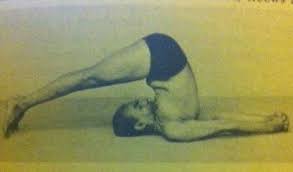


Key Benefits
  • headaches, fatigue, soothes brain and the nerves; relieves hot flashes
  • curative in menstrual and urinary disorders, 
  • good for arthritis and stiffness of shoulders and the arms
  • same effects as Sarvangasana cramps in hand are relieved
  • gripping pain in stomach relieved
  • good for high blood pressure
How to get into Halasana
  1. From Salamba Sarvangasana bring the feet down have all 10 toes touching the ground, roll the shoulders under  and clasp the hands and extend them away from the body. Stay in for a few minutes.
  2. To come out keep sides of neck even and reach through the toe mounds as you roll one vertebrae at a time down to support with straight legs towards head and lastly legs to the ground. Slide off support to with tips of shoulders touching the ground. Rest before rolling to the side before getting up. 
Key Point
  1. Roll the shoulder blades into the back and be on the tips of the shoulders,  as you clasp the hands and extend the hands away from the body roll the inner arm out and press the arm into the ground. 
  2. Broaden the toe mounds  and press down and lengthen from the toe mound to the inner heel and the inner heel towards the hips. 
  3. Stretch the outer knee ligament and lift the knee caps while you press the top center thigh up to the ceiling as you continue to press the arms into the ground open the armpit chest and lengthen the side waist away from the shoulders. 
  4. Keep the lift of the side trunk and align the hips with the shoulders, as you maintain the height of the hips descend the top of the buttocks towards the hamstrings. 
  5. Keep the sides of the neck even and soft and maintain the chin coming towards the sternum. 
  6. Soften the eyes and breathe

Modifications:

  • ardha halasana if too much fat in stomach or thighs, migraines, breathing difficulties, high blood pressure, nerves need to be rested, thighs completely on stool

Saturday, July 13, 2019

Why to start

So most people have been told by someone, "You should try yoga" Doctors, friends, maybe family has suggested it to you. But you are just at a hard NO.

  •  No I don't want to go inside a studio/ be around people
  • No, I don't want someone to see how tight I am, I can't touch the floor (A lot of yogis can't FYI) 
  • No it is too expensive
  • No, I want to bother a teacher, I'll get a DVD, or a book and do it at home- I'll share my story about those later
  • No it is uncomfortable staring at myself in a mirror
  • No I am too injured
  • No I will look silly in class, everyone will stare at me (everyone thinks that, so everyone keeps their eyes on themselves)
Did I cover all the excuses? Right, then how to we move through them? Some people, and I am one of these type of people, say "I can do hard things" show up and jump right in. For me that is doable. But I have friends who have severe anxiety around other people. Going to a studio is terrifying for them, although yoga is great with anxiety. 

In our day and age we focus so much on our bodies. Unfortunately this is also starting to occur in yoga as well. There are different sects of yoga that are the "get sexy" yoga. I am not saying they are not good or wont work, I don't know I have never taken a class in their studios, but they are not there to heal and help your body progress to the next level, beyond "hot". A strong yoga body does not mean a skinny body. I have seen too many senior teachers to know that. A strong yoga body is that, strong, it is able to carry you, hold you, sustain you through all trials life has, and when it gets hurt, your body knows how to recover. You are never to injured to come to a Certified Iyengar Yoga Teacher. Oh and because we don't focus on getting "hot" we have no mirrors. 

Expense is a hard one to get over. I have tried to offer free classes and no one shows up. I am currently offering privates at a ridiculously low rate because I am hoping if you pay something then you will feel committed to practice and continue. If your choice is a book or me, or a DVD or me. Come to one session of me. Let me give you your own personal sequence based on what you want to see in your body and you can work on that sequence till you are ready to move on to another one. But a book or DVD/ streaming won't teach you the same things a teacher can. I have done it, and I know the difference. Being in person is 1000% better than streaming, even streaming a live class. You can't beat a living teacher next to you. 

So how do you pay? Well there are great options. Health Savings Account will allow you to pay for yoga- because it is health related, so if you have a health savings account tap into that. Check your insurance and see if you get a prescription from your doctor if your insurance will cover it. You will need to make sure the teacher or studio will work with insurance agencies. Lastly if you really can't afford the classes try to make a trade. I started teaching to pay for my yoga. Now my teaching doesn't pay for all my yoga, but it was how I was able to start. So ask around. My mom cleaned our dance studio to pay for dance lessons for 3 girls. 

If you are ready to try I can be there to take that first step with you. If that is as a teacher or as a friend, I will be your biggest cheerleader. Find what is your reason why you haven't started and see what can be done about it. 

    Supta Konasana

    Supta Konasana

    Reclined angle pose
    Inversion pose
    Image result for supta konasana iyengar


    Key Benefits
    • tones the legs and help contract the abdominal organs
    • beneficial to those with kidney and uterus complaints
    • checks menstrual flow and white discharge
    • removes pain and heaviness in uterus and corrects position of uterus
    How to get into Supta Konasana
    1. From feet on the floor straighten both legs and pull the trunk up.
    2. Take the feet to the left and right spreading the legs increasing the distance as far as you can
    3. To return walk both the feet back to feet on the floor
    Key Point
    1. Raise the chest
    2. Lift the back and buttocks by scooping the back flesh up with the hands
    3. Continue to widen the legs apart as your ability increases; the feet should not drop to the sides, but remain heels to the ceiling. 

    Modifications:

    • tones the legs and help contract the abdominal organs
    • beneficial to those with kidney and uterus complaints
    • checks menstrual flow and white discharge
    • removes pain and heaviness in uterus and corrects position of uterus


    Image result for supta konasana iyengar

    Thursday, July 11, 2019

    Karnapidasana


    Karnapidasana

    Ear Pressure Pose/ Deaf man pose
    Inverted pose
    091-karnapidasana-iyengar.jpg


    Key Benefits
    • rests trunk heart and legs
    • helps circulation of blood round the waistline
    • removes backache and flatulence
    How to get into Karnapidasana
    1. From Salamba Sarvangasana bring the feet to the floor and bend the knees and lower them down to the floor either side of the face, next to the ears. The toes point away from the head; soles of the feet are up, big toes together.
    2. Arms either straight behind the body, supporting the back, as in Salamba Sarvangasana, or wrapped around the thing
    3. Exhale raise the knees up and be in bent legs feet on the floor.
    Key Point
    1. Maintain the lift of the trunk and firmness of the spine
    2. Move the thighs towards the abdomen so they remain together

    Modifications:

    • Add a brick under both knees to release pressure on the neck
    • Bring toes to a chair and rest toes on a chair. 


    Wednesday, July 10, 2019

    Salamba Sarvangasana

    Salamba Sarvangasana 1

    Supported Whole limbs pose
    Inverted pose pose
    086-salamba-sarvangasana-1-iyengar.jpg


    Key Benefits
    • Panacea for most common ailments
    • Bathes endocrine organs, ductless glands in blood- thyroid and parathyroid venous blood flows to heard wit h no strain
    • Healthy blood circulates around neck and chest, suffering from breathlessness, palpitation, asthma, bronchitis, throat ailments get relief
    • Nerves are soothed, headaches disappear
    • Eradicates common colds and nasal disturbances
    • Hypertension, irritation, shortness of temple  nervous breakdown, insomnia are relieved
    • Bowels move freely constipation vanishes, system is freed of toxins one feels full of of energy
    • Recommended for urinary disorder,uterine displacement, menstrual troubles, piles and hernia
    • Relieve epilepsy, low vitality, anemia
    • Feel new vigorous and strength and be happy and confident, new lift will flow to him
    • Activates abdominal organs, relieves suffering from stomach and intestinal ulcers, severe pains from abdomens and colitis
    Image result for salamba sarvangasana iyengar set up
    How to get into Salamba Sarvangasana

    ***You need 4 blankets 1 bolster or brick, 1 strap***
    1. Lie down with the buttocks on the bolster edge of your setup. Lift the hips, interlock the fingers and roll the shoulders under. Bring the buttocks down on your hands. Press down on the bolster palms and bring the legs over your head toes on the ground, bent legs. Place a belt around your arms, just above the elbows. Adjust the arms again. Bring the feet to your buttocks, then knees to the ceiling, then straighten your legs into Salamba Sarvangasana. 
    2. Lower the legs one at a time down to the floor. Remove the belt, press the palms in the back roll out, and bring the legs to the original resting position. Slide off the setup so the tips of your shoulder blades touch the floor. 
    Key Point
    1. Press the outer shoulders down and move them towards the elbow as you take the shoulder blades in and broaden the chest.
    2. Coil and lift the armpit chest  and use the hands to scoop the back flush up
    3. Roll the thighs from outside in, take the thighs back and take the tailbone in as you extend  the inner legs to the inner heels. 
    4. Lengthen the sides of the chest from the armpits to the hips and compact the outer hips in. 
    5. Be sure the extension of the legs reaches the feet  and open the mounds of the toes. 
    6. Relax the neck, face and jaw as you look forwards the chest.

    Modifications:

    • First learn halasana then take one leg up at a time
    • If can’t breathe due to large breasts add an extra blanket
    • start close to the wall and use the wall to walk the feet up into the pose
    Contraindications
    • High blood pressure unless first do halasana and stay less than 3 minutes
    • cycle

    Monday, July 8, 2019

    Dandasana

    Dandasana

    Staff Pose
    Seated pose
    dandasana-iyengar.jpg


    Key Benefits
    • stretches the leg muscles, massages abdominal organs and strengthens the waist muscles
    • tones the kidneys and trains one to sit straight with spine erect
    How to get into Dandasana
    1. Sit on blankets with your legs outstretched. Keep the legs and feet straight and together. Move the flesh out from under the sit bones and keep the sacrum moving into the body.  
    2. Straighten the torso and the arms next to the body as you bring the hands next to the sit bones. Press into the blankets  and look forward.
    Key Point
    1. Press the top center thighs down as you lift the kneecaps into the thighs and stretch the outer knee ligaments. Roll the thighs together and extend from the inner groins out to the inner ankles as you press the toe mounds away from the body.
    2. Lengthen the torso towards the ceiling keeping it perpendicular to the ground and bring the shoulder blades together and spread the collarbones and lift the sternum.

    Modifications:

    • Sit on blankets to keep the tailbone and pelvic floor neutral and low back straight
    • Sit on edge of a bench if hamstrings are too tight, and rest feet on the floor, keep the back straight

    Sunday, July 7, 2019

    Salamba Sirsasana

    Salamba Sirsasana- best first done with a teacher

    Supported Head stand
    Inverted pose
    Image result for iyengar sirsasana cycle

    Key Benefits
    • seat of Brahman the soul, regular practice make s healthy pure blood flow through brain cells, rejuvenates them so that thinning power increases and thoughts become clearer
    • tonic for people whose brains tire quicker
    • proper blood supply for pituitary and pineal glands
    • lungs gain power and resist climate  and stand up to work and relieves one from colds, coughs tonsillitis, halitosis, and palpitations, 
    • keeps body warm
    • show marked improvement in hemoglobin concentration on blood
    How to get into Salamba Sirsasana
    1. Interlock the fingers and create a cup with your hands, creating a space between your fingers and your wrist. Place that 2-3 inches away from a wall.
    2. Keeping that straighten your legs as in Adho Mukha Svanasana and walk towards the wall moving the shoulder blades away from the ears. 
    3. Once you have walked in as close as you can let the crown of your head touch the floor and the back of your head touch the  sides of your thumbs. With the majority of your weight on your forearms. 
    4. Swing your legs up one at a time to the wall keeping your feet together. 
    Key Point

    • A beginner must have the assistance of a friend or do the asana against a wall. While practicing against a wall the distance between it and the head should not be more than 2 or 3 inches
    • lift up the sternum so that thee cervical vertebrae are not compressed and weight of the body is not felt on the head
    • lift the side ribs up and broaden the chest so that dorsal vertebrae remain concave
    • keep the lumbar vertebrae erect so that the abdominal muscles are stretched and a the stomach does not protrude
    • keep the buttocks a little way from the wall so that the neck and the small of the back are balance
    • let the heels take the support of the wall so that you do not lose your balance.
    • Press elbow joints and the forearms down; keep the elbows firm and do not move them; lift the shoulders and the armpits so that the weight does not fall on the ears and neck; keep the shoulders well away from the wrists; 
    • broaden the intercostal muscles and list them up; keep the armpits well opened and extended upwards; 
    • to list the sternum and broaden the chest, tuck in the dorsal spine and the shoulder -blades without disturbing the head and the neck;
    • keep the sides of the trunk lifted up’
    • let the ankles and the toes touch each other; straighten the feet so that they are in lien with the legs and not turning in or out and point the toes upwards.
    • IF one overbalances,one should remember to loosen the interlocked fingers, relax, go limp and flex the knees. Then one will just roll over and smile. 

    Modifications:
    • heaviness or irritation in ututus, discharge or menstrual disorder or hernia keep heels apart and toes touching, knees slightly apart
    • advisable for a beginner to do the head stand in a corner where two walls meet, placing the head 2 to 3 inches from either wall. In the corner he can touch the heels to either side of the walls. He should then stretch the back vertically up, gradually leave the support of the wall and learn to master the balance. While coming down, he can rest eh feet and hips against the wall, slide down and kneel, resting his knees on the floor. The movement of coming down and going up should be done with an exhalation.